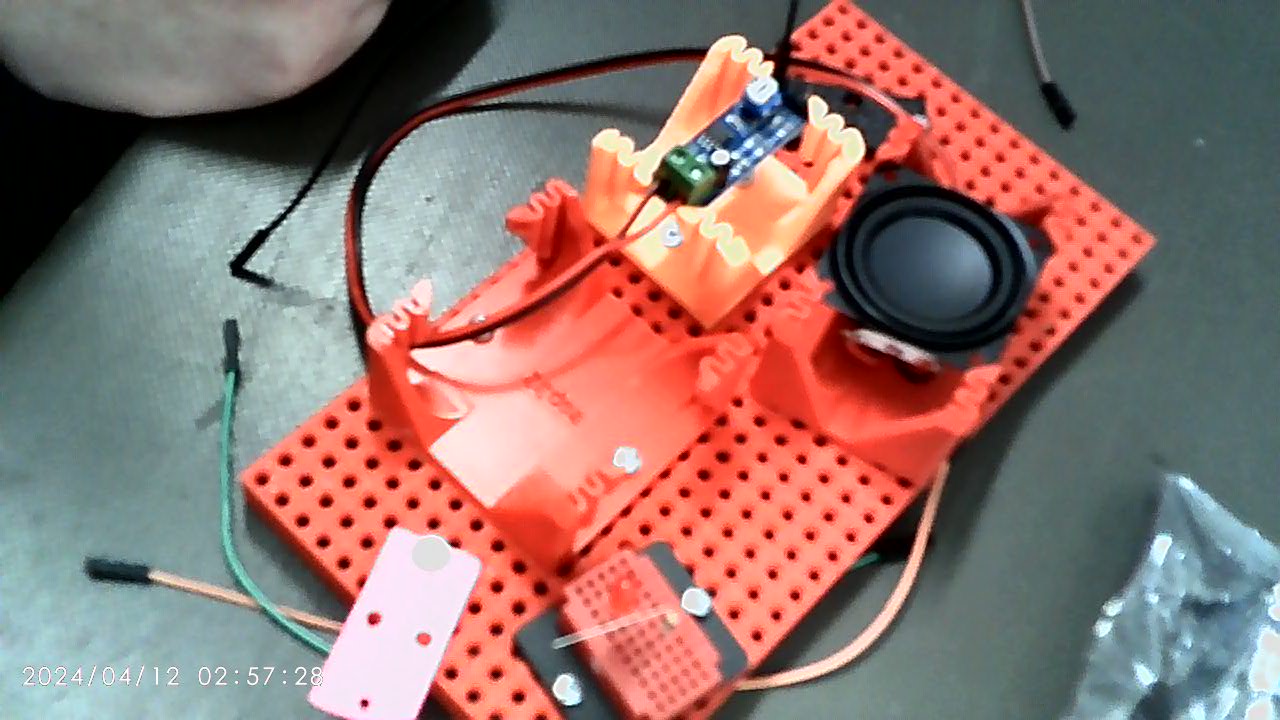
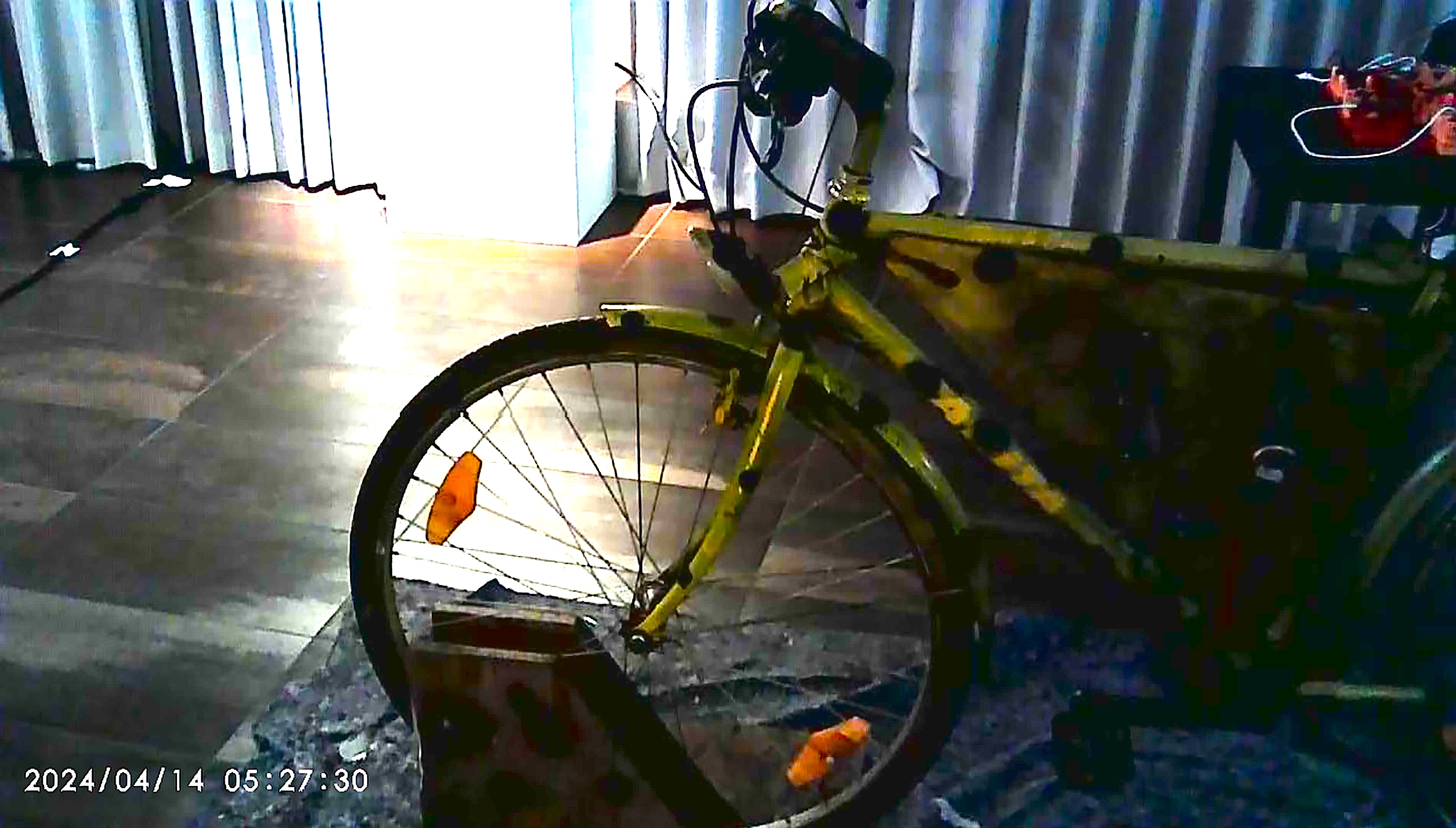
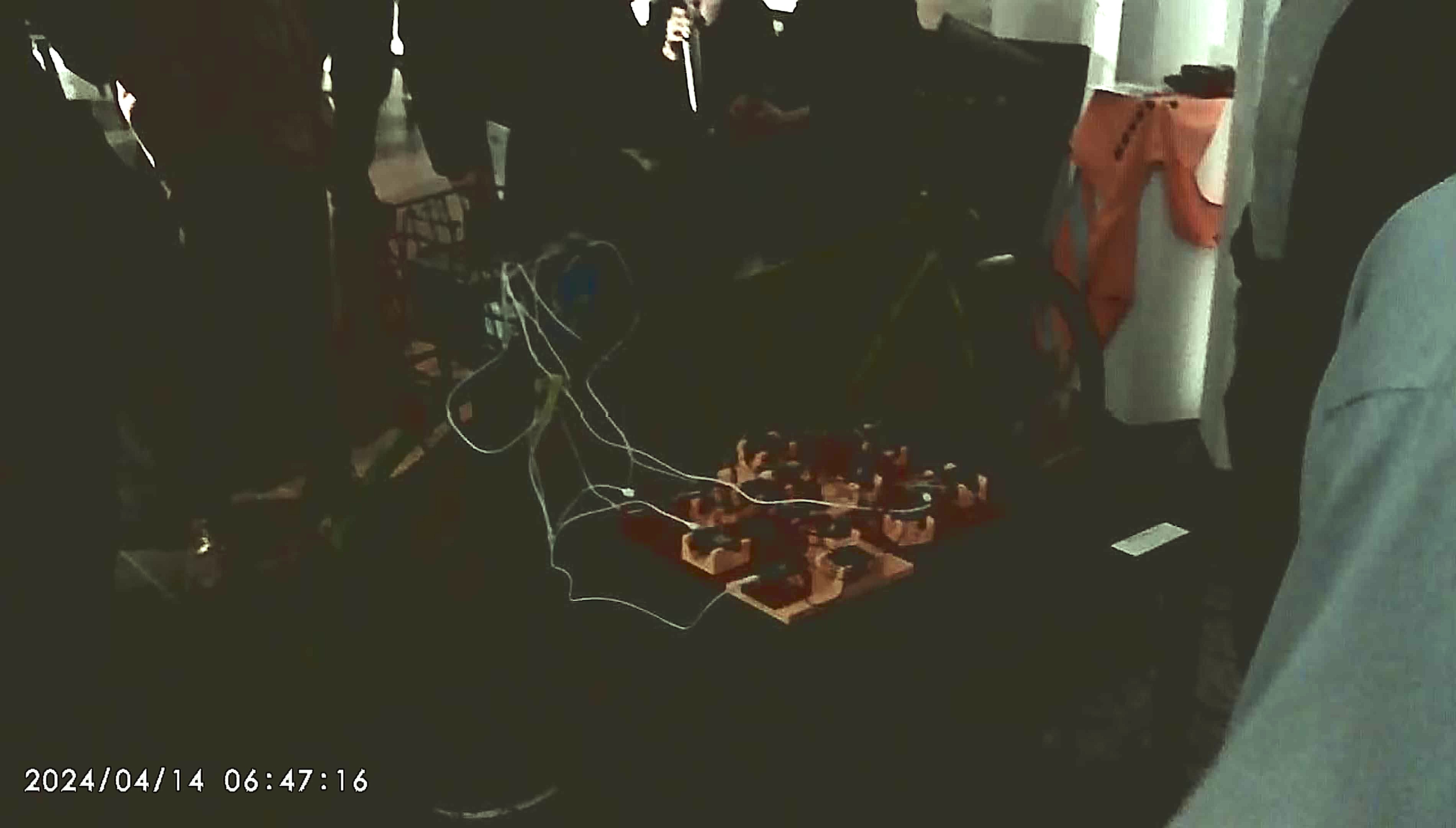
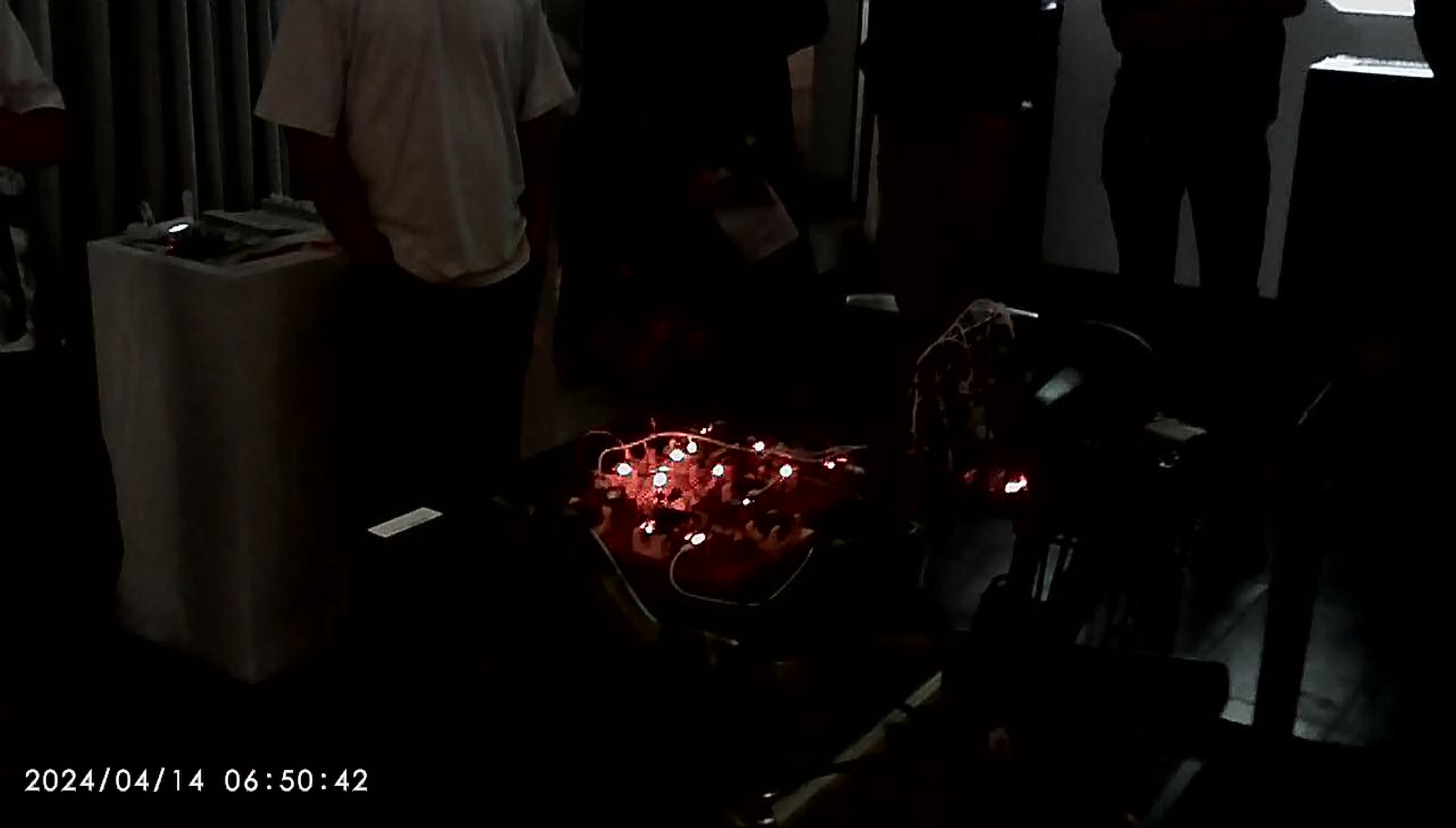
Unlocking Electricity [2026] is a collaborative kinetic sound installation developed by Carmen Pomet and Silvia Binda. It is designed to convert in real time human physical activity directly into electrical energy. The project re-imagines the bicycle, a machine traditionally used for transport, as a stationary kinetic interface for energy production. The bike serves as the kinetic input device and its rotational motion is converted into electrical current and stored in a battery bank used by a network of microcontrollers that generate PWM square waves. Our collaboration was developed during a one-week residency in December 2025, at mur.at, an association is based in Graz that "operates a local server farm, and is connected to the global network via ACOnet (the Austrian Research Network); a virtual, constantly expanding platform dedicated to the development and promotion of internet culture" (mur.at, accessed April 2026). Over the course of the week, participants of the residency built their microcontroller assambling 3D-printed cases and small speakers to the ESPs and coded basic MicroPython scripts to make the microcontrollers play personalised melodies, patterns, etc. The results formed part of the final installation, powered by a stationary bicycle operated by visitors to the exhibition. Beyond its technical and collaborative dimensions, the project is grounded in a broader artistic research question: How can the experience of energy generation be materialised through an interactive kinetic artwork to provoke reflection on contemporary energy ethics? The question opens up the conceptual framework for our project by emphasising the idea of machine art and kinetic art as forms of interactive art, functioning as "machines that can sense, move, and react to visitors, or that create chain reactions by transforming energy from one representation into another" (Baalman, Composing Interactions, 2022). The project's significance lies in its articulation of collectivity, embodied action, and material technological production as intertwined modes of knowledge-making. Our project posits the embodied effort of power generation as a material critique of consumption, compelling the participant to renegotiate their relationship with energy as a collective and ethical responsibility.
Photos: Zlata Zhidkova ©